Then I was 55 years old. One day suddenly I felt constant thirst and had the urge to drink more water. I also felt constant hunger even just after taking a meal. My legs often cramped and I had severe cold sweat. I went for a check up and the doctor diagnosed Diabetes, sometimes reaching 250 and it worried me so much. Doctor prescribed some medication and I was on medication for 2.5 years.
My brother who was staying in Malaysia was very concerned, he was a successful businessman. I went to visit my brother and sister when I was 57 yrs old and my brother told me he was given a traditional treatment recipe for diabetes which was claimed to be very effective. He also suffered from Diabetes for 25 years and had complication and was unable to walk but now he was cured.
Here's the Recipe :
Steam 4 limes (green lime) together with 1 chicken without head and tail. Cut limes into half, add some salts and water just to cover the chicken. I was given this 4 times during my stay in Malaysia.
The taste was not very good but I still took it with the hope of curing the disease. It took me 1 week to finish a chicken (1 recipe), sometimes I drank it as a soup or for supper.
After 2 months I returned to Taiwan and had a medical check up again. The doctor advised me to stop my Diabetes medication as the blood sugar had plunged to below the standard count. He couldn't believe it when I told him what I took. From then on I did constant blood check and it was normal. So for prevention, sometimes I still had it once in a while. Lime was not available in Taiwan at that time and my brother sent them to me from Malaysia.
I am now 71 years old, and there's no recurrence. During this time I have been staying in Canada, the USA and have been eating healthy diet and the chicken lime recipe once in a while.
As the ingredients are all natural, there's no harm at all to have a try. Please spread this to your friends or whoever needs it.
A Must-Have Family Health Care Guide: All you need to know about Health, Wellness, Health Care Products, Nutrition Supplements, Natural Health Care Products, Alternative Health Care Products, Preventive Health Care Products to stay fit to deal with the daily stresses of life and have good physical and mental health for a long and healthy life. Your health and wellness is under your control, if you choose for it to be. Enjoy our Free Family Health Guide!
Saturday, February 4, 2012
Wednesday, January 4, 2012
Cancer Symptoms Most Often Ignored
Annual checkups and tests such as colonoscopies and PSA assays are important, but it’s not a good idea to rely on tests alone to protect you from cancer.
It’s just as important to listen to your body and notice anything that’s different, odd, or unexplainable.
(You should also listen to those close to you, such as a wife or partner, because others sometimes notice things we’re unaware of–or don’t want to admit.)
You don’t want to join the ranks of cancer patients who realize too late that symptoms they’d noticed for a long time could have sounded the alarm earlier, when cancer was easier to cure.
1. Upset stomach or stomachache
One of the first signs colon cancer patients remember experiencing when they look back is unexplained stomach aches.
Those with pancreatic cancer describe a dull ache that feels like it’s pressing inward.
Many liver cancer patients say they went in complaining of stomach cramps and upset stomachs so frequently that their doctors thought they had ulcers. Liver cancer patients and those with leukemia can experience abdominal pain resulting from an enlarged spleen, which may feel like an ache on the lower left side.
If you have a stomachache that you can’t attribute to a digestive problem or that doesn’t go away, ask your doctor to order an ultrasound.
Finding a liver or pancreatic tumour early can make all the difference in treatment.
2. Chronic “acid stomach” or feeling full after a small meal The most common early sign of stomach cancer is pain in the upper or middle abdomen that feels like gas or heartburn. It may be aggravated by eating, so that you feel full when you haven’t actually eaten much. What’s particularly confusing is that the pain can be relieved by antacids, confirming your conclusion that it was caused by acid in the stomach, when it’s more than that.
An unexplained pain or ache in lower right side can be the first sign of liver cancer, known as one of the “silent killers.”
Feeling full after a small meal is a common sign of liver cancer as well. If you have frequent bouts of acid stomach, an unexplained abdominal ache, or a full feeling after meals even when you’re eating less than normal, call your doctor.
3. Unexplained weight loss If you notice the pounds coming off and you haven’t made changes to your diet or exercise regime, it’s important to find out why. Unexplained weight loss can be an early sign of colon and other digestive cancers; it can also be a sign of cancer that’s spread to the liver, affecting your appetite and the ability of your body to rid itself of waste.
4. Jaundice Pancreatic cancer, another one of the “silent killers,” is often discovered when someone notices jaundice and asks the doctor to do a battery of tests. Jaundice is most commonly thought of as a yellowing of the skin or whites of the eyes, but darker-than- normal urine that’s not the result of dehydration is also a sign. Clay-colored stools are another little-known sign of jaundice. Oddly, jaundice can also cause itching, because the bile salts in the bloodstream cause the skin to itch.
Some people with pancreatic cancer say they noticed the itching before they noticed the jaundice itself.
5. Wheezing or shortness of breath One of the first signs lung cancer patients remember noticing when they look back is the inability to catch their breath. “ I couldn’t even walk to my car without wheezing; I thought I had asthma, but how come I didn’t have it before ? ”, is how one man described it. Shortness of breath, chest pain, or spitting blood are also signs of testicular cancer that’s spread to the lungs.
6. Chronic cough or chest pain Several types of cancer, including leukemia and lung tumors, can cause symptoms that mimic a bad cough or bronchitis.
One way to tell the difference: The problems persist, or go away and come back again in a repeating cycle. Some lung cancer patients report chest pain that extends up into the shoulder or down the arm.
7. Frequent fevers or infections These can be signs of leukemia, a cancer of the blood cells that starts in the bone marrow. Leukemia causes the marrow to produce abnormal white blood cells, which crowd out healthy white cells, sapping the body’s infection-fighting capabilities. Doctors sometimes catch leukemia in older adults only after the patient has been in a number of times complaining of fever, aches, and flu-like symptoms over an extended period of time.
8. Difficulty swallowing Most commonly associated with esophageal or throat cancer, having trouble swallowing is sometimes one of the first signs of lung cancer, too. Men diagnosed with esophageal cancer look back and remember a feeling of pressure and soreness when swallowing that didn’t go away the way a cold or flu would have. Consult your doctor also if you have a frequent feeling of needing to clear your throat or that food is stuck in your chest; either of these can signal a narrowing of the esophagus that could mean the presence of a tumor.
9. Chronic heartburn If you just ate half a pizza, heartburn is expected. But if you have frequent episodes of heartburn or a constant low-level feeling of pain in the chest after eating, call your doctor and ask to be screened for esophageal cancer.
Gastroesophageal reflux disease (GERD) — a condition in which stomach acid rises into the esophagus, causing heartburn and an acidic taste in the throat — can trigger a condition called Barrett’s esophagus, which can be a precursor of esophageal cancer...
10. Swelling of facial features Some patients with lung cancer report that they noticed puffiness, swelling, or redness in the face. The explanation for this is that small cell lung tumors commonly block blood vessels in the chest, preventing blood from flowing freely from the head and face.
11. Swollen lymph nodes or lumps on the neck, underarm, or groin Enlarged lymph nodes indicate changes in the lymphatic system, which can be a sign of cancer. For example, a lump or an enlarged lymph in the neck or underarm is sometimes a sign of thyroid, head, or throat cancer.
A painless lump on the neck, underarm, or groin can be an early sign of leukemia.
12. Excessive bruising or bleeding that doesn’t stop
This symptom usually suggests something abnormal happening with the platelets and red blood cells, which can be a sign of leukemia. One man with leukemia noticed that his gums bled when he brushed his teeth; another described bruising in strange places, such as on his fingers and hands.
The explanation: Over time, leukemia cells crowd out red blood cells and platelets, impairing the blood’s ability to carry oxygen and clot.
13. Weakness and fatigue “I had to stop halfway across the yard and sit down when I was mowing the lawn,” said one man when describing the fatigue that led to his discovery of pancreatic cancer. Generalized fatigue and weakness is a symptom of so many different kinds of cancer (and other ills) that you’ll need to look at it in combination with other symptoms.
But any time, you feel exhausted without explanation and it doesn’t respond to getting more sleep, talk to your doctor.
14. Rectal bleeding or blood in stool “I thought it was hemorrhoids” is one of the most common statements doctors hear when diagnosing colorectal cancer.
Blood in the toilet alone is reason to call your doctor and schedule a colonoscopy.
Another sign of blood in the stool many people miss is stools that are darker in color.
15. Bowel problems Constipation, diarrhea, and changes in stools can all be signs of cancer.
As with many other cancer symptoms, the way to tell if this is cause for concern is if it goes on for more than a few days without a clear cause, such as flu or food poisoning.
People diagnosed with colon cancer say they noticed more frequent stools, as well as a feeling that their bowels were not emptied completely.
One of the early signs of pancreatic cancer is fatty stools, which can be recognized as frequent, large stools that are paler than normal and smelly. This is a sign that your body’s not absorbing your food normally, and it should be brought to your doctor’s attention.
16. Difficulty urinating or changes in flow Hands-down, the most common early sign of prostate cancer is a feeling of not being able to start peeing once you’re set to go. Many men also report having a hard time stopping the flow of urine, a flow that starts and stops, or a stream that’s weaker than normal. Any of these symptoms is reason to call your doctor for an exam and a screening test for prostate-specific antigen.
17. Pain or burning during urination This symptom can also indicate a urinary tract infection or sexually transmitted disease, of course, but in any case it warrants an immediate trip to the doctor. This symptom is often combined with the feeling that you need to go more often, particularly at night. These same symptoms can also indicate inflammation or infection in the prostate or benign prostatic hyperplasia, the name for what happens when the prostate grows bigger and blocks the flow of urine. However, you need to get checked out to tell the difference.
18. Blood in urine or semen Men are often warned about blood in the urine, but they may not realize that blood in semen is also a danger sign for prostate cancer. Blood in the urine or semen isn’t always visible as blood; urine may just be a pink, dark red, or smoky brown color, while blood in the semen may just look like a pinkish streak.
19. Erection problems As prostate cancer progresses, another very common sign is difficulty getting or sustaining an erection. This can be a difficult subject to talk about, but it’s important to bring it to your doctor’s attention. It could be a sign of sexual dysfunction with another cause, of course, but it’s a reason to have an exam and a prostate-specific antigen (PSA) test.
20. Pain, aching, or heaviness in the groin, hips, thighs, or abdomen One sign of prostate cancer is frequent pain in the hips, upper thighs, or the lowest part of the back. Men with testicular cancer report noticing a heavy, aching feeling low in the belly or abdomen, or in the scrotum or testicles themselves. They sometimes describe it as a feeling of downward pulling or as a generalized ache throughout the groin area.
Prostate cancer that has spread to the lymph nodes often makes itself known as discomfort in the pelvis or swelling in the legs.
21. Testicular swelling or lump The lumps that indicate testicular cancer are nearly always painless.
It’s also common for a testicle to be enlarged or swollen, but lacking any specific lump that you can see or feel.
Some men report feeling discomfort from the enlargement, but not an outright pain.
22. Unexplained back pain Back pain can mean all sorts of things, of course — most often pulled muscles or disc problems. But unexplained, persistent back pain can be an early sign of cancer as well, so get it checked out.
Pain in the lower back and hips can be a sign of prostate cancer, while pain in the upper back can signal lung cancer.
A pain in the upper abdomen and back is one of the few early signs of pancreatic cancer.
23. Scaly or painful nipple or chest, nipple discharge Men do get breast cancer; they also get a condition called gynecomastia, which is a benign lump in the breast area. Breast cancer is usually detected as a lump, but if it’s spreading inward it can also cause chest pain.
Other signs of breast cancer include patches of red, scaly, or dimpled skin or changes to the nipple such as turning inward or leaking fluid.
Bring any lump, swelling, or skin or nipple problem, or any chest pain, to your doctor's attention.
24. A sore or skin lump that doesn’t heal, becomes crusty, or bleeds easily Most of us know how to watch moles for changes that might indicate skin cancer.
But other signs, such as small waxy lumps or dry scaly patches, are easier to miss.
Familiarize yourself with the different types of skin cancer — melanoma, basal cell carcinoma, and squamous cell carcinoma — and be vigilant about checking skin all over the body for odd-looking growths or spots.
25. Changes in nails Unexplained changes to the fingernails can be a sign of several types of cancer.
A brown or black streak or dot under the nail can indicate skin cancer.
A newly discovered “clubbing,” which means enlargement of the ends of the fingers, with nails that curve down over the tips, can be a sign of lung cancer.
Pale or white nails can be an indication that your liver is not functioning properly, sometimes a sign of liver cancer.
Tuesday, January 3, 2012
STROKE: Remember the First Three Letters, S. T. R.
During a BBQ, a woman stumbled and took a little fall - she assured everyone that she was fine (they offered to call paramedics) ....she said she had just tripped over a brick because of her new shoes.
They got her cleaned up and got her a new plate of food. While she appeared a bit shaken up, Jane went about enjoying herself the rest of the evening.
Jane's husband called later telling everyone that his wife had been taken to the hospital - (at 6:00 pm Jane passed away.) She had suffered a stroke at the BBQ. Had they known how to identify the signs of a stroke, perhaps Jane would be with us today. Some don't die. They end up in a helpless, hopeless condition instead.
It only takes a minute to read this.
A neurologist says that if he can get to a stroke victim within 3 hours he can totally reverse the effects of a stroke...totally. He said the trick was getting a stroke recognized, diagnosed, and then getting the patient medically cared for within 3 hours, which is tough.
They got her cleaned up and got her a new plate of food. While she appeared a bit shaken up, Jane went about enjoying herself the rest of the evening.
Jane's husband called later telling everyone that his wife had been taken to the hospital - (at 6:00 pm Jane passed away.) She had suffered a stroke at the BBQ. Had they known how to identify the signs of a stroke, perhaps Jane would be with us today. Some don't die. They end up in a helpless, hopeless condition instead.
It only takes a minute to read this.
A neurologist says that if he can get to a stroke victim within 3 hours he can totally reverse the effects of a stroke...totally. He said the trick was getting a stroke recognized, diagnosed, and then getting the patient medically cared for within 3 hours, which is tough.
RECOGNIZING A STROKE
Thank God for the sense to remember the '3' steps, STR. Read and Learn!
Sometimes symptoms of a stroke are difficult to identify. Unfortunately, the lack of awareness spells disaster. The stroke victim may suffer severe brain damage when people nearby fail to recognize the symptoms of a stroke.
Now doctors say a bystander can recognize a stroke by asking three simple questions:
S *Ask the individual to SMILE.
T *Ask the person to TALK and SPEAK A SIMPLE SENTENCE (Coherently)
(i.e. It is sunny out today.)
R *Ask him or her to RAISE BOTH ARMS
If he or she has trouble with ANY ONE of these tasks, call emergency number immediately and describe the symptoms to the dispatcher.
New Sign of a Stroke -------- Stick out Your Tongue
NOTE: Another 'sign' of a stroke is this: Ask the person to 'stick' out his tongue. If the tongue is 'crooked' and if it goes to one side or the other that is also an indication of a stroke.
A cardiologist says if everyone who gets this e-mail sends it to 10 people; you can bet that at least one life will be saved.
I have done my part. Will you?
Monday, January 2, 2012
Break Out the Coconut Oil: It is Good for You
(NaturalNews) If you could make one change in your current diet which would positively affect all other areas of your life, would you do it? If you knew that just three tablespoons of a saturated fat would positively benefit your current health condition, would you take those three tablespoons of medicine?
The Secret Fountain of Youth
The secret Fountain of Youth, of health and longevity, has been located. No, it`s not actually water, but the fountain-like tree of the Coconut Palm or Cocos nucifera, which is a member of the Arecaceae family. This family also includes the famous acai fruit, dates, and other drupe fruits which are popular in tropical and subtropical regions.
Many common products and foods are derived from the palm family. In fact, all through history palms have become symbols of life, victory, peace, fertility, and sustenance. The Coconut Palm, in particular, is often called the tree of life in the many cultures which rely on it for sustenance. Virtually every part of the Coconut Palm is used for something - from roof thatch to boats, from clothing to firewood, from garden mulch to a variety of culinary uses. In Sanskrit the name is kalpa vriksha, which means "the tree which provides all the necessities of life." While those in Malay refer to it as pokok seribu guna, or "tree of a thousand uses." In the Philippines, the coconut is affectionately termed "The Tree Of Life."
Wherein Coconut is The Main Course
If a person were to take a look at the countries in which coconut oil and milk were staples of the diet, they would notice that those who have not adopted any part of a western diet are beautiful and robust. If you were to take a trip to Sri Lanka, where coconut products are used in every meal and the population consumes an average of 120 coconuts per year, you would notice the health and fitness of the inhabitants. A little more research would show you that merely one or two deaths of every 1,000 are contributed to heart disease, compared to heart disease in America, which contributes to nearly half of all deaths.
Other countries which rely heavily on coconut include most parts of India, the Philippines, and most islands of the Pacific. You would notice that these people who have not adopted the modern Western diet - which contains unsaturated margarine and vegetable oils - and who consume this saturated fat of the coconut oil also have low instances of any major illnesses. Heart disease, diabetes, high cholesterol, high blood pressure, obesity and many other common complaints of the Western World are virtually nonexistent. Their secret is coconut oil.
When people of these regions have adopted the Western diet, researchers have found that the instances of these diseases became comparably close to that of Americans. In fact, a major study was performed on the remote islands of Pukapuka and Tokelau. The entire populations of these islands took part in the study. Before the study, coconut oil, milk, and meat was the main staple in the diet contributing to 60% or more of the populations` daily intake of calories from fat, while the American Heart Association only recommends that up to 30% of daily calories consumed come from fat and that no more than 10% of that fat should be saturated.
Despite this recommendation, those populations were consuming 50% of their calories are from saturated fat from coconut products. Yet, these people showed no evidence of heart disease, high cholesterol, diabetes, cancer, or any other immunological or degenerative disease common in the Western World. In fact, atherosclerosis and arthritis were not even heard of!
When researchers had half the population in the study begin eating a Western diet, they began to develop the disease found in the Western world within days to weeks of adopting the new Western diet. When they returned to their traditional coconut-based diet, the diseases disappeared.
The Right Kind of Fat
Make no mistake; this article is not discussing hydrogenated coconut oil. Refined and/or hydrogenated coconut oil, just like other refined or hydrogenated oils, should never be consumed. Refined or hydrogenated oils of any kind contain harmful metals and toxins as well as nonmetabolizable and indigestible fats, which promote diseases. When you hear reports about studies which claim that coconut oil does raise cholesterol levels and promote heart disease, they are leaving out the crucial point that the study was done with hydrogenated coconut oil.
No, this article is discussing pure, unrefined, organic, coconut oil. Dozens of studies over the past few decades have shown that natural coconut oil, the organic extra virgin kind, has no adverse effects on cholesterol levels. In fact, researchers have found quite the opposite is true. The fact is if unrefined coconut oil was the cause of disease, then these countries which rely heavily on it would show evidence of disease. In reality, quite the opposite is true.
Bad Publicity
Unfortunately, the fallacy of the reported negative research has slipped up many reporters and by and large the misinformed writers, healthcare professionals, and the public. While the reports were accurate, the conveyed information left out that refined and hydrogenated coconut oil was used in the studies, which developed diseases in the participants. This problem is compounded because everybody recites and repeats each others` false statements. If the public and health care professionals were only to read the new research and the full reports, they would find that they were in the dark ages of nutritional knowledge. So, if you hear about negative aspects of coconut oil and product, realize that the person is misinformed and kindly do some research of your own.
On the other hand, research performed with unrefined coconut oils resulted in some amazing findings. People who consumed the unrefined and non-hydrogenated coconut oils were healthier at the end of the study than those who consumed the refined and hydrogenated coconut and/or vegetable oils or a low fat diet. Manufacturers have become so pleased with the health benefits of coconut oil that they have begun to use it as a "secret" ingredient in their baby formulas and adult nutrition formulas used in hospitals for tube feeding. Research has now confirmed that coconut oil is one of the most nutritious and healthful foods available. It is recommended to everyone, including those with health problems, to include unrefined coconut oil into their diets daily.
The Miracle Non-Nut
While coconuts are called nuts, they are not actually nuts. Rather, they are the monocot seed of the palm family. It is rare that anyone has allergies or adverse reactions to the coconut. So rare, in fact, that none have been reported. However, many report the positive reactions they have felt from the coconut. Those who have diabetes have reported lower blood sugar counts. Those which have high cholesterol have reported lowered cholesterol. Those who experience lethargy or low body temperatures have reported their energy levels rising and their body temperature normalizing.
Even those experiencing common addictions have reported quitting smoking and drinking without even realizing it. Those who suffer from obesity have reported a reduction in food cravings and astounding weight-loss of around 2 pounds per week. They claim that the weight melts right off!
How much do you need to take to receive health benefits? The recommended daily dosage is three tablespoons. Of course, you can feel free to take more than that. Coconut oil is heat-stable oil. You can cook with it, fry with it, bake with it and even eat it right out of the jar. It is a delicious butter replacement and melts easily onto your toast. It adds a delicious, light flavor to everything it complements.
Since it is solid at room temperature and liquid at body temperature, it is shelf stable for months, even years, in the right conditions. Unlike other oils, even olive oil, it does not develop cancer-causing chemicals at moderately high heat. So, go ahead, replace your butter and cooking oil. You can even replace your favorite skin cream and lotion. Coconut oil is an excellent moisturizer and provides excellent health benefits both outside and in.
Learn more:http://www.naturalnews.com/025717_coconut_oil.html#ixzz1iN4fXO5j
The Secret Fountain of Youth
The secret Fountain of Youth, of health and longevity, has been located. No, it`s not actually water, but the fountain-like tree of the Coconut Palm or Cocos nucifera, which is a member of the Arecaceae family. This family also includes the famous acai fruit, dates, and other drupe fruits which are popular in tropical and subtropical regions.
Many common products and foods are derived from the palm family. In fact, all through history palms have become symbols of life, victory, peace, fertility, and sustenance. The Coconut Palm, in particular, is often called the tree of life in the many cultures which rely on it for sustenance. Virtually every part of the Coconut Palm is used for something - from roof thatch to boats, from clothing to firewood, from garden mulch to a variety of culinary uses. In Sanskrit the name is kalpa vriksha, which means "the tree which provides all the necessities of life." While those in Malay refer to it as pokok seribu guna, or "tree of a thousand uses." In the Philippines, the coconut is affectionately termed "The Tree Of Life."
Wherein Coconut is The Main Course
If a person were to take a look at the countries in which coconut oil and milk were staples of the diet, they would notice that those who have not adopted any part of a western diet are beautiful and robust. If you were to take a trip to Sri Lanka, where coconut products are used in every meal and the population consumes an average of 120 coconuts per year, you would notice the health and fitness of the inhabitants. A little more research would show you that merely one or two deaths of every 1,000 are contributed to heart disease, compared to heart disease in America, which contributes to nearly half of all deaths.
Other countries which rely heavily on coconut include most parts of India, the Philippines, and most islands of the Pacific. You would notice that these people who have not adopted the modern Western diet - which contains unsaturated margarine and vegetable oils - and who consume this saturated fat of the coconut oil also have low instances of any major illnesses. Heart disease, diabetes, high cholesterol, high blood pressure, obesity and many other common complaints of the Western World are virtually nonexistent. Their secret is coconut oil.
When people of these regions have adopted the Western diet, researchers have found that the instances of these diseases became comparably close to that of Americans. In fact, a major study was performed on the remote islands of Pukapuka and Tokelau. The entire populations of these islands took part in the study. Before the study, coconut oil, milk, and meat was the main staple in the diet contributing to 60% or more of the populations` daily intake of calories from fat, while the American Heart Association only recommends that up to 30% of daily calories consumed come from fat and that no more than 10% of that fat should be saturated.
Despite this recommendation, those populations were consuming 50% of their calories are from saturated fat from coconut products. Yet, these people showed no evidence of heart disease, high cholesterol, diabetes, cancer, or any other immunological or degenerative disease common in the Western World. In fact, atherosclerosis and arthritis were not even heard of!
When researchers had half the population in the study begin eating a Western diet, they began to develop the disease found in the Western world within days to weeks of adopting the new Western diet. When they returned to their traditional coconut-based diet, the diseases disappeared.
The Right Kind of Fat
Make no mistake; this article is not discussing hydrogenated coconut oil. Refined and/or hydrogenated coconut oil, just like other refined or hydrogenated oils, should never be consumed. Refined or hydrogenated oils of any kind contain harmful metals and toxins as well as nonmetabolizable and indigestible fats, which promote diseases. When you hear reports about studies which claim that coconut oil does raise cholesterol levels and promote heart disease, they are leaving out the crucial point that the study was done with hydrogenated coconut oil.
No, this article is discussing pure, unrefined, organic, coconut oil. Dozens of studies over the past few decades have shown that natural coconut oil, the organic extra virgin kind, has no adverse effects on cholesterol levels. In fact, researchers have found quite the opposite is true. The fact is if unrefined coconut oil was the cause of disease, then these countries which rely heavily on it would show evidence of disease. In reality, quite the opposite is true.
Bad Publicity
Unfortunately, the fallacy of the reported negative research has slipped up many reporters and by and large the misinformed writers, healthcare professionals, and the public. While the reports were accurate, the conveyed information left out that refined and hydrogenated coconut oil was used in the studies, which developed diseases in the participants. This problem is compounded because everybody recites and repeats each others` false statements. If the public and health care professionals were only to read the new research and the full reports, they would find that they were in the dark ages of nutritional knowledge. So, if you hear about negative aspects of coconut oil and product, realize that the person is misinformed and kindly do some research of your own.
On the other hand, research performed with unrefined coconut oils resulted in some amazing findings. People who consumed the unrefined and non-hydrogenated coconut oils were healthier at the end of the study than those who consumed the refined and hydrogenated coconut and/or vegetable oils or a low fat diet. Manufacturers have become so pleased with the health benefits of coconut oil that they have begun to use it as a "secret" ingredient in their baby formulas and adult nutrition formulas used in hospitals for tube feeding. Research has now confirmed that coconut oil is one of the most nutritious and healthful foods available. It is recommended to everyone, including those with health problems, to include unrefined coconut oil into their diets daily.
The Miracle Non-Nut
While coconuts are called nuts, they are not actually nuts. Rather, they are the monocot seed of the palm family. It is rare that anyone has allergies or adverse reactions to the coconut. So rare, in fact, that none have been reported. However, many report the positive reactions they have felt from the coconut. Those who have diabetes have reported lower blood sugar counts. Those which have high cholesterol have reported lowered cholesterol. Those who experience lethargy or low body temperatures have reported their energy levels rising and their body temperature normalizing.
Even those experiencing common addictions have reported quitting smoking and drinking without even realizing it. Those who suffer from obesity have reported a reduction in food cravings and astounding weight-loss of around 2 pounds per week. They claim that the weight melts right off!
How much do you need to take to receive health benefits? The recommended daily dosage is three tablespoons. Of course, you can feel free to take more than that. Coconut oil is heat-stable oil. You can cook with it, fry with it, bake with it and even eat it right out of the jar. It is a delicious butter replacement and melts easily onto your toast. It adds a delicious, light flavor to everything it complements.
Since it is solid at room temperature and liquid at body temperature, it is shelf stable for months, even years, in the right conditions. Unlike other oils, even olive oil, it does not develop cancer-causing chemicals at moderately high heat. So, go ahead, replace your butter and cooking oil. You can even replace your favorite skin cream and lotion. Coconut oil is an excellent moisturizer and provides excellent health benefits both outside and in.
Learn more:http://www.naturalnews.com/025717_coconut_oil.html#ixzz1iN4fXO5j
Saturday, December 31, 2011
How Our Spine Affects Our Bodies
Go to the following link and check out a fascinating demo of how our spine affects our bodies Roll your mouse over any of the 24 vertebrae in the human spine below to learn how each vertebra is connected to specific areas, organs and functions of your body, as well as how subluxation of that vertebrae may cause health challenges if not corrected. |
Tuesday, December 20, 2011
What You Do Not Know about Abdominal Fat
An increasing number of people have been reported to have excess abdominal fat nowadays. Given the modern lifestyle we now have, where everything is instant, putting on those flabs has become much easier. The society's knowledge about abdominal fat is limited to it simply being a physical nuisance. What most people do not know is that it is the most dangerous fat in the body.
Studies indicate that while excess body fat is harmful, excess abdominal fat is a major health risk. The two types of fat in your abdominal area are subcutaneous fat, which lies on top of your abdominal muscles; and visceral fat, which surrounds your organs. Both greatly increase your risks for heart disease, diabetes, high blood pressure, stroke, cancer, and other degenerative diseases. In fact, your belly fat is a better indicator of heart disease risk than BMI (body mass index).
Why is abdominal fat more dangerous?
Inflammation is an intriguing aspect of many health problems. It is suspected to be the cause of all diseases and is strongly linked to heart disease. Abdominal fat releases more inflammatory molecules into your body on a consistent basis than other body fats.
Belly fat is also linked to insulin resistance because it is indicative of excess fat in the liver. This degrades the liver's ability to process insulin. Excess insulin ruins your arteries and leads to heart attack. It also sends hunger signal to your brain to make you eat more, increasing your risks for obesity and other chronic diseases.
How to get rid of the flabs?
Getting rid of the abdominal fat is a lot of work. There is no quick fix solution for this problem. The pills advertised in the market today are often ineffective and unhealthy. The only way to lose your abdominal fat is to incorporate proper nutrition with a strategically-designed exercise program that stimulates correct hormonal and metabolic responses in your body. Your diet plan has to be concentrated on unprocessed natural foods. While sit-ups, crunches, and other exercises can strengthen your belly muscles, they do not eliminate abdominal fat. Overall weight loss is required for significant belly fat loss.
To learn how to naturally increase metabolism and lose weight, visit yogic-slim.com.
Check Biggie's complete diet and exercise plan and find out how he lost 32 kilos in two months at BRAND NEW ME.
Studies indicate that while excess body fat is harmful, excess abdominal fat is a major health risk. The two types of fat in your abdominal area are subcutaneous fat, which lies on top of your abdominal muscles; and visceral fat, which surrounds your organs. Both greatly increase your risks for heart disease, diabetes, high blood pressure, stroke, cancer, and other degenerative diseases. In fact, your belly fat is a better indicator of heart disease risk than BMI (body mass index).
Why is abdominal fat more dangerous?
Inflammation is an intriguing aspect of many health problems. It is suspected to be the cause of all diseases and is strongly linked to heart disease. Abdominal fat releases more inflammatory molecules into your body on a consistent basis than other body fats.
Belly fat is also linked to insulin resistance because it is indicative of excess fat in the liver. This degrades the liver's ability to process insulin. Excess insulin ruins your arteries and leads to heart attack. It also sends hunger signal to your brain to make you eat more, increasing your risks for obesity and other chronic diseases.
How to get rid of the flabs?
Getting rid of the abdominal fat is a lot of work. There is no quick fix solution for this problem. The pills advertised in the market today are often ineffective and unhealthy. The only way to lose your abdominal fat is to incorporate proper nutrition with a strategically-designed exercise program that stimulates correct hormonal and metabolic responses in your body. Your diet plan has to be concentrated on unprocessed natural foods. While sit-ups, crunches, and other exercises can strengthen your belly muscles, they do not eliminate abdominal fat. Overall weight loss is required for significant belly fat loss.
To learn how to naturally increase metabolism and lose weight, visit yogic-slim.com.
Check Biggie's complete diet and exercise plan and find out how he lost 32 kilos in two months at BRAND NEW ME.
Saturday, December 17, 2011
Nails and health - Read the Signs
1) Pale Nails
Very pale nails are sometimes linked to aging. But they can also be a sign of serious illness, such as:
· Anemia
· Congestive heart failure
· Diabetes
· Liver disease
· Malnutrition
If the nails are mostly white with darker rims, this can indicate liver problems, such as hepatitis. In this image, you can see the fingers are also jaundiced, another sign of liver trouble.
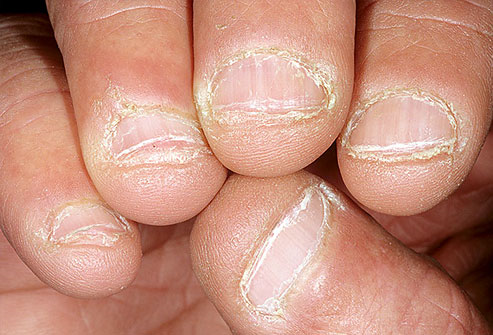
6) Cracked or Split Nails
Dry, brittle nails that frequently crack
or split have been linked to thyroid disease. Cracking or splitting combined with a yellowish hue is more likely due to a fungal infection.
7) Puffy Nail Fold
If the skin around the nail appears red and puffy, this is known as inflammation of the nail fold. It may be the result of lupus or another connective tissue disorder.
8) Dark Lines Beneath the Nail
Dark lines beneath the nail should be investigated as soon as possible. They are sometimes caused by melanoma, the most dangerous type of skin cancer.
9) Gnawed Nails
Biting your nails may be nothing more than
an old habit, but in some cases its a sign of persistent anxiety that could benefit from treatment. Nail biting or picking has also been
linked to obsessive-compulsiv e disorder. If you cant stop, its worth discussing with your doctor.
Note: Though nail changes accompany many conditions, these changes are rarely the first sign. And many nail abnormalities are harmless -- not everyone with white nails has hepatitis. If you're concerned about the appearance of your nails, see a skin doctor dermatologist or a Physician.
Very pale nails are sometimes linked to aging. But they can also be a sign of serious illness, such as:
· Anemia
· Congestive heart failure
· Diabetes
· Liver disease
· Malnutrition
If the nails are mostly white with darker rims, this can indicate liver problems, such as hepatitis. In this image, you can see the fingers are also jaundiced, another sign of liver trouble.
3) Yellow Nails
One of the most common causes of yellow nails is a fungal infection. As the infection worsens, the nail bed may retract, and nails may thicken and crumble. In rare cases, yellow nails can indicate a more serious condition such as severe thyroid disease or psoriasis.4) Bluish Nails
Nails with a bluish tint can mean the body isnt getting enough oxygen. This could indicate an infection in the lungs, such as pneumonia.5) Rippled Nails
If the nail surface is rippled or pitted, this may be an early sign of psoriasis or inflammatory arthritis. Psoriasis is a skin condition that starts in the nails 10% of the time.6) Cracked or Split Nails
Dry, brittle nails that frequently crack
or split have been linked to thyroid disease. Cracking or splitting combined with a yellowish hue is more likely due to a fungal infection.
7) Puffy Nail Fold
If the skin around the nail appears red and puffy, this is known as inflammation of the nail fold. It may be the result of lupus or another connective tissue disorder.
8) Dark Lines Beneath the Nail
Dark lines beneath the nail should be investigated as soon as possible. They are sometimes caused by melanoma, the most dangerous type of skin cancer.
Biting your nails may be nothing more than
an old habit, but in some cases its a sign of persistent anxiety that could benefit from treatment. Nail biting or picking has also been
linked to obsessive-compulsiv e disorder. If you cant stop, its worth discussing with your doctor.
Note: Though nail changes accompany many conditions, these changes are rarely the first sign. And many nail abnormalities are harmless -- not everyone with white nails has hepatitis. If you're concerned about the appearance of your nails, see a skin doctor dermatologist or a Physician.
Saturday, December 10, 2011
Alzheimer’s, Snoring and Sleep Apnea Connection
Alzheimer’s is most often considered an incurable and
unavoidable disease. Many of us have helplessly watched loved
ones experience this painful condition, steadily degenerating the
person’s functionality and personality.
Recent studies have, however, connected Alzheimer’s to a couple
of very unexpected co-conspirators, snoring and sleep apnea. And
by drawing some common sense conclusions, researchers have come
up with a method that may help EVERY Alzheimer’s patient to not
only stop this horrible disease but maybe also reverse it to some
level.
What’s even more important, this gives hope that Alzheimer’s
may be totally prevented from developing in the first place.
This full-featured article is especially important if you or
someone close to you snores. To read more and make your comment,
please CLICK HERE
unavoidable disease. Many of us have helplessly watched loved
ones experience this painful condition, steadily degenerating the
person’s functionality and personality.
Recent studies have, however, connected Alzheimer’s to a couple
of very unexpected co-conspirators, snoring and sleep apnea. And
by drawing some common sense conclusions, researchers have come
up with a method that may help EVERY Alzheimer’s patient to not
only stop this horrible disease but maybe also reverse it to some
level.
What’s even more important, this gives hope that Alzheimer’s
may be totally prevented from developing in the first place.
This full-featured article is especially important if you or
someone close to you snores. To read more and make your comment,
please CLICK HERE
Tuesday, December 6, 2011
Cancer is Finally Cured in Canada?
DCA (Dichloroacetate) is an odourless, colourless, inexpensive, relatively non-toxic, small molecule. And researchers at the University of Alberta believe it may soon be used as an effective treatment for many forms of cancer. However, because the compound is not patented, you may never see it on the market as Drug companies can not profit from it. This does not make sense. Why can't the governments step in?
Saturday, December 3, 2011
The Benefits of Listening to Music
1. Pain Killer: Music has the ability to reduce pain through release of endorphins which act as natural pain killers. It can also divert attention away from the pain and encouraging relaxation. According to a study published in the Journal of Advanced Nursing, listening to music daily can reduce chronic pain by up to 21 percent. The study also found that listening to music made people feel more in control of their pain, reduced depression, and made people feel less disabled by their condition.
2. Reduces Stress: Stress has been associated with many illnesses, including several mental illnesses that seem to occur only in people with exceedingly high stress levels. In a study conducted, subjects were made listen to a half-hour of soothing music twice daily for two weeks. It showed significantly greater reductions in stress and anxiety levels in the subjects.
3. Cardiovascular benefits: Listening to soothing music also helps reduce your heart rate and blood pressure. As a result of a lower blood pressure, it also reduces the risk of stroke and other health problems over time. In a new Italian study, researchers found that people with mild hypertension (high blood pressure) who listened to classical, Celtic or Indian (raga) music for just 30 minutes a day for one month had significant reductions in their blood pressure. Good music helps to calm down the cells and tissues that make up the lungs thereby bringing down the patient’s breathing and heart rate to normal.
4. Stimulate brains cells: Research has shown that music with a strong beat can stimulate brainwaves to resonate in sync with the beat, with faster beats bringing sharper concentration and more alert thinking. On the other hand, listening to soothing classical music improves ability to focus for longer time and promotes a calm, meditative state. It brings about a sense of well-being and creativity, a change which lasts long after the music has ceased to play.
5. Boosts exercise performance: Listening to music while you exercise may have a considerable impact on your exercise performance and commitment. Music diverts your attention in repetitive exercises thus the feeling of fatigue, exhaustion and boredom are evaded. Music can also act as a stimulant which can increase your performance. Respiration and cardiac rate is increased from music which can help you intensify your workout. According to a study conducted in 2005, listening to music while exercising boosted participants’ weight loss and helped exercisers stay consistent.
6. Promote a sound sleep: Listening to music as we drift off to sleep ensures that we get the rest that we need from our sleep. Sleep puts your body in a healthy condition as it takes away the effects of stress, depression and anxiety from a person.
7. Increase optimism: Depression leads to weakness, headache, confusion, and loss of concentration. Music can also be used to bring a more positive state of mind, helping to keep depression at bay. Good music also makes one to remember happy moments or good days. It also increases self-esteem and self-confidence.
8. Helps in Cancer: Research suggests that music may offer a number of benefits for people coping with cancer. It reduces anxiety in patients receiving radiation therapy, as well as eases nausea and vomiting resulting from high-dose chemotherapy.
9. Helps socialize: Music is a great way to get together with people who share a similar passion. It helps you to meet new people, socialize and give you a sense of belonging.
10. Helps in spiritual health: There is a unique connection between music and spirituality. Chanting or some kind of music helps people worship in a meaningful way, and makes them feel closer to God.
Music performs unimaginable wonders and is fundamental to a human’s well-being. So make music a part of your lifestyle and feel the difference.
Subscribe to:
Posts (Atom)